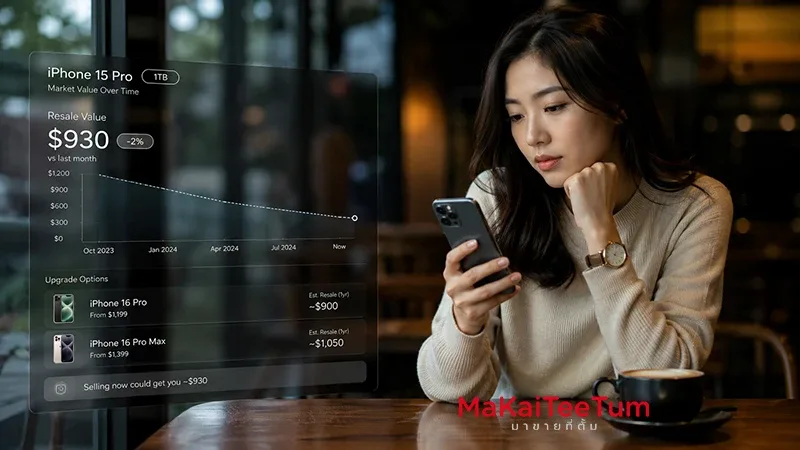

Most people buy an iPhone for performance, design, or ecosystem — but overlook one critical factor: resale value. The moment you decide to upgrade, a hidden variable suddenly matters — your device’s region code.
In markets like Thailand, iPhones are not all perceived equally. A model labeled “TH” (official Thai distribution) can command a noticeably higher resale price compared to “LL” (U.S.) or “ZP” (Hong Kong), even when the hardware is identical.
This guide breaks down the real-world pricing dynamics, buyer psychology, and strategic timing behind iPhone resale — so you can make smarter decisions both when buying and selling.
Understanding iPhone Region Codes: More Than Just a Label
Every iPhone carries a region identifier that reflects where it was originally distributed. While Apple maintains hardware consistency across regions, subtle differences in usability, warranty support, and perception significantly impact second-hand pricing.
- TH (Thailand) – Officially distributed, fully supported by Apple Thailand
- LL (United States) – Often eSIM-only in newer models, which can limit appeal
- ZP (Hong Kong) – Dual physical SIM support, attractive to specific users
On paper, these differences seem minor. In the resale market, however, they directly influence buyer confidence — and ultimately, price.
Resale Value Comparison: How Much Difference Are We Talking About?
Market-Based Pricing Reality
Data from trade-in platforms and second-hand marketplaces consistently shows that Thai-market iPhones (TH) outperform imported variants by approximately 5–15% in resale value, especially within the first 12–24 months.
Why TH Models Retain Value Better
- Higher buyer trust – No uncertainty about compatibility or usage
- Seamless warranty access – Easier service through Apple Thailand
- Mass-market appeal – Suitable for all users without limitations
Where LL and ZP Still Compete
- Lower upfront cost – Often cheaper when purchased abroad
- Niche features – Dual SIM or specific configurations
However, what you save initially may be offset by steeper depreciation later.

The Real Insight: Why Some iPhones Depreciate Faster
1. Local Demand Drives Pricing
In Thailand, the majority of buyers prefer devices that are fully localized. This creates stronger demand — and price stability — for TH units.
2. Perceived Risk Impacts Negotiation
Devices with unfamiliar configurations (e.g., eSIM-only) introduce hesitation. Buyers compensate for that uncertainty by negotiating lower prices.
3. Liquidity Matters
TH devices sell faster. Imported models may require waiting for a niche buyer who understands the trade-offs.
Which One Should You Buy If You Care About Resale?
Long-Term Value Strategy
If resale value is part of your decision-making, TH models are the safest bet. They offer predictable depreciation and strong market demand.
Short-Term Savings Approach
If your priority is minimizing upfront cost — and resale isn’t a concern — LL or ZP models can still be worthwhile.
The key is alignment: choose based on your exit strategy, not just purchase price.
Best Time to Sell Your iPhone (Trade-In Timing Strategy)
Timing plays a crucial role in maximizing resale value.
- 1–2 months before new model launch – Prices remain relatively stable
- Immediately after launch – Sharp depreciation begins
- After 2+ years of use – Value drops significantly
The optimal strategy is proactive selling — not reactive. Waiting too long can cost more than expected.
Should You Keep Using It or Sell Now?
Keep Using
If your device still performs well and you don’t plan to upgrade soon, holding onto it makes sense.
Sell Now
If an upgrade is likely within the next 6–12 months, selling earlier often yields a better financial outcome due to depreciation curves.
In simple terms: iPhones lose value fastest in the early lifecycle — timing your sale can make a meaningful difference.
How to Maximize Your iPhone’s Resale Price
- Keep original box and accessories
- Avoid third-party repairs when possible
- Maintain physical condition
- Choose trusted resale channels
These factors can increase perceived value and improve final selling price by up to 10%.
Quick Decision Guide
- TH models typically resell 5–15% higher
- Imported models save upfront but depreciate faster
- Sell before new model releases for best pricing
- Condition and completeness directly impact value
- Plan your exit before you buy
Before You Sell: Check Your iPhone’s Current Value
If you’re unsure whether now is the right time to sell, getting a quick valuation can help you make a more informed decision.
MaKaiTeeTum (มาขายที่ตั้ม) offers fast iPhone price evaluations within 10 minutes, with pickup service and instant payment — designed for convenience and security.
You can send your model and condition via LINE: @KunTum or explore more at makaiteetum.com