Nowadays, buying and selling second-hand iPhones has become increasingly popular. However, one of the main concerns for buyers is the condition and repair history of the device, especially if the screen, battery, or other parts have been replaced with non-genuine components. This makes both buyers and sellers pay extra attention to repair history.
How to Check Parts and Service History in iOS
Apple has added a feature in iOS that allows users to check iPhone repair history directly. The steps are as follows:
- Go to Settings
- Select General
- Tap About
- Scroll down to view information about replacements such as Screen, Battery, or Camera
This section will show whether the part inside is a Genuine Apple Part. If not, the user will see a clear warning message such as “iPhone ชิ้นส่วนที่ไม่รู้จัก” which directly affects credibility and resale value.
Impact of the ‘Unknown Part’ Warning on Resale Value
If an iPhone displays the Unknown Part message, buyers who check the Settings will immediately know the device has non-genuine replacements. The consequences are:
- Buyers may use this to negotiate a lower price
- Sellers lose credibility and receive a reduced resale price
- The second-hand market increasingly prioritizes genuine parts
Apple’s Self Service Repair Program
Apple launched the Self Service Repair Program, allowing users to order genuine Apple parts and tools directly. The key benefits of this program are:
- Users can be certain that the parts are 100% genuine
- Repairs with Apple-provided proof help preserve device value more than third-party repairs
- Suitable for those with repair skills or users willing to invest in specialized tools
Effects on New Display Technologies
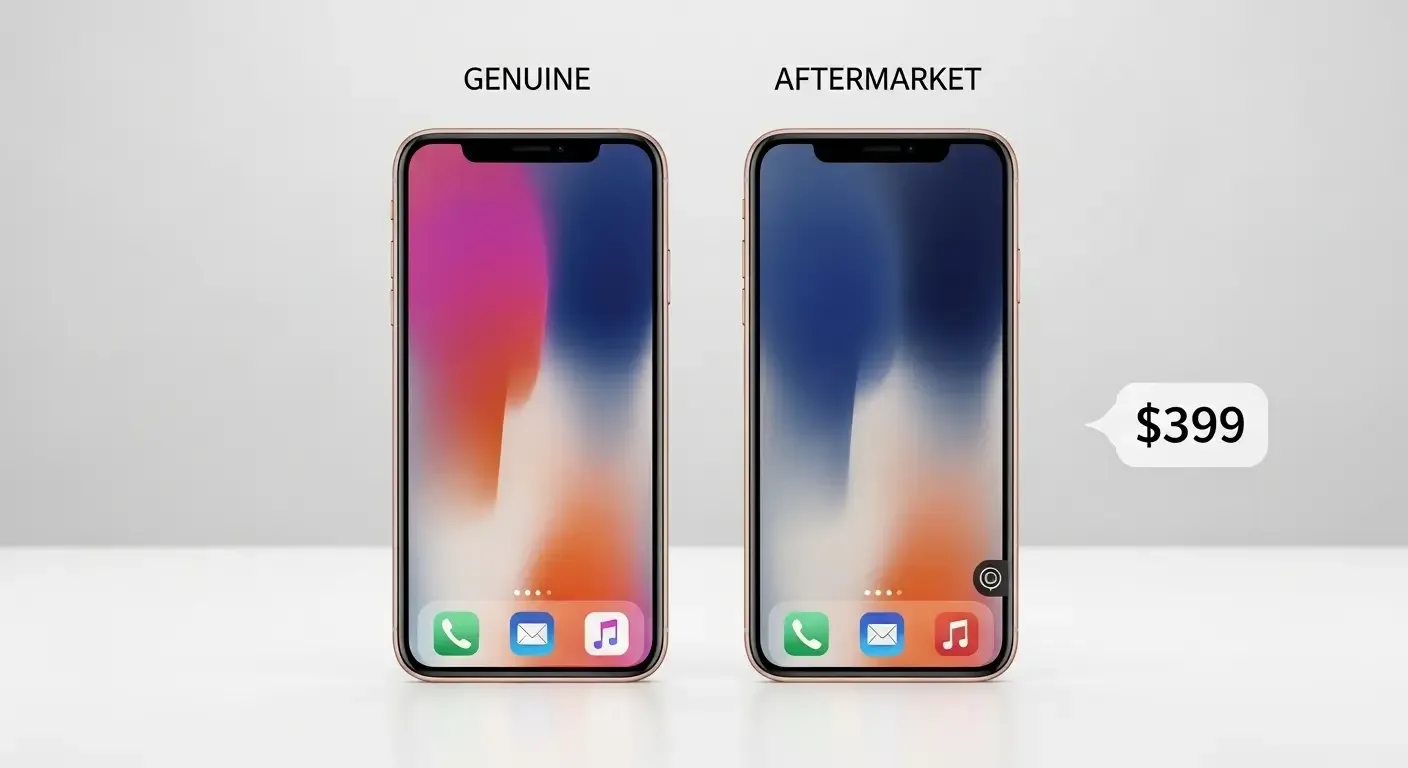
Using a non-genuine display directly affects advanced features in newer iPhones, such as:
- ProMotion 120Hz – Genuine displays support high refresh rates for smooth scrolling, but most aftermarket screens cannot.
- Dynamic Island – This new feature uses the display cutout area to show interactive information. Non-genuine displays may malfunction or lack full support.
- True Tone – Often lost after replacing with a non-genuine display, leading to unnatural color tones.
As a result, the resale value of iPhones with non-genuine displays on iOS 18 drops significantly, since buyers know the user experience will not match genuine screens.
Advice for Second-Hand iPhone Buyers and Sellers
- Always check repair history before purchase
- Choose repairs done by Apple or shops that use genuine parts
- Consider using Self Service Repair if you have the technical skills
- Be transparent with buyers if any non-genuine parts were used
FAQ
Q: How can I check if my iPhone has had its screen or battery replaced?
A: Go to Settings > General > About, then check the Parts and Service History section for details.
Q: What happens if the device shows ‘Unknown Part’?
A: Buyers will have less confidence, the resale price will be lower, and some functions may not perform at their best.
Q: Why is Self Service Repair better than third-party repair shops?
A: This program guarantees the use of genuine Apple parts and preserves device value better than generic third-party replacements.
Conclusion
Checking iPhone repair history and understanding genuine vs non-genuine parts are key factors influencing resale value. Choosing Apple-certified repairs or the Self Service Repair program is a worthwhile investment, ensuring both peace of mind and maximum device value long-term.
References